
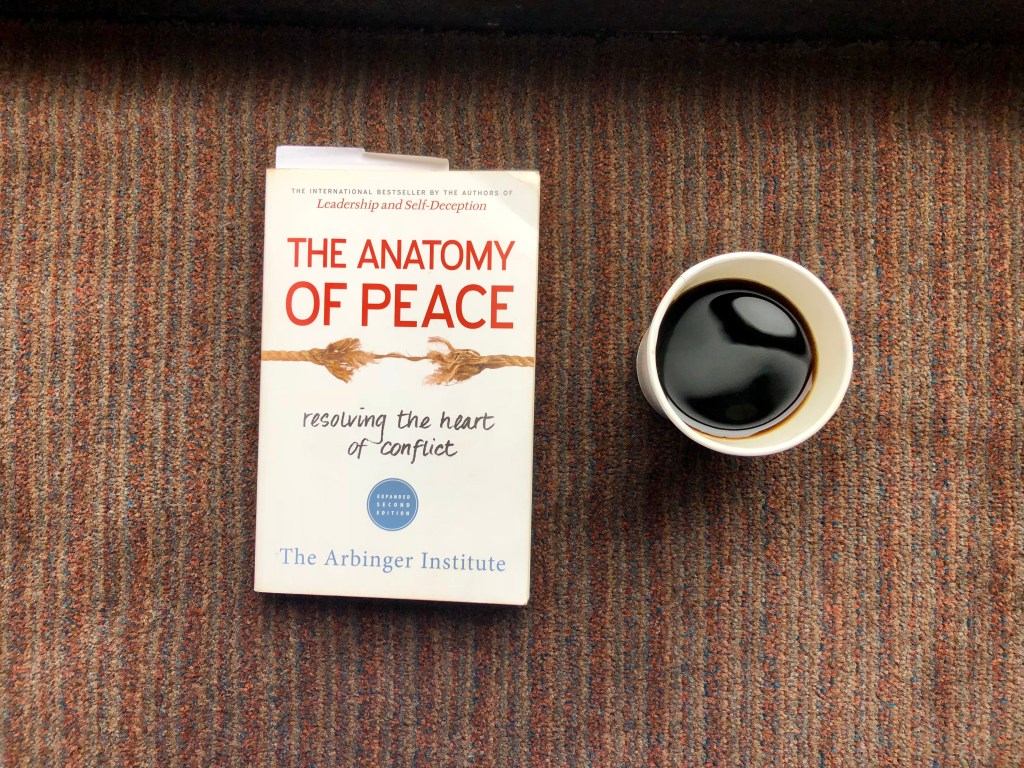
The Anatomy of Peace is a fascinating read that holistically lays out why people gravitate towards conflict and collision. My biggest learning from this book is that the way we understand people is based on how we perceive ourselves in relation to them. After we strip away all external aspects – people, situations, etc – what we are left with is ourselves. And that is where this book focuses because it is we who absorb the world using lenses deep within us.
My boss once said that everyone is a universe. This implication deeply resonated with me because of all the complicated factors it takes to make a universe work. We all have good days and bad, are confident or wrecked with indecision, can feel ecstatic or lethargic. We live our life balancing what is inside us in the face of an ever-changing, noisy, outside world. It’s our interactions with others that allow for energies to be shared and on a personal level, sometimes people’s energies can be quite draining.
This book helped me realize that the most powerful thing we can do to keep living our best, most authentic truth is to keep a constant pulse on how we filter information into the depths of our being. Not everything deserves access to our private thoughts and lives. But the reason is not the other, but the realization that in order to keep our sacred inner garden pristine, undisturbed, and untroubled allow for only ourselves to inhabit that space. Only when we are as steady as calm water can we tap into our deepest intuition and grounded decisions making abilities.
Now, this is difficult given the high stimulus society we live in. But if our perceptions of the outside world depends on how we understand people and objects in relation to us, don’t we owe it to ourselves to keep our inner garden as receptive, authentic and unperturbed as possible?
Only when we are free of bias and disturbance can we pick up where we’d like to go next. The book talks a lot about the importance of choice too, and how one road leads to the honoring of your choice, while the other leads to betrayal of self. When we betray our sense of choice – i.e. decide to not tip our waiter though we had an impulse to do so – we begin justifying our actions to ourselves. This small act of betraying our choice is a choice to go to war with ourselves:
“When I betray myself…I create within myself a new need – a need that causes me to see others accusingly, a need that causes me to care about something other than truth and solutions, and a need that invites others to do the same in response.” (p.94)
“When I betray myself, others’ faults become immediately inflated in my heart and mind. I begin to ‘horribilize’ others. That is, I begin to make them out to be worse than they really are. And I do this because the worse they are, the more justified I feel.” (p.96)
One act of self betrayal offsets an entire cycle of judgment, hatred, negativity and cynicism – all within us. And if we don’t monitor and guard how we absorb the world around us, this can happen throughout the day during even the tiniest of interactions.
It is only when we dig deep inside us and quiet disturbed waters can we ensure that what goes on around us will not penetrate and taint our inner sanctum.


 Une Pause