
President Bartlett: What is the virtue of a proportional response? Why is it good? They hit an airplane – we hit a transmitter. Right? That’s a proportional response.
Admiral Percy Fitzwallace: Sir, in the case of Pericles…
President Bartlett: They hit a barracks, we hit two transmitters.
Admiral Percy Fitzwallace: That’s roughly it, yes, sir. This is what we do.
President Bartlett: This is what we do. I mean, this is what we do.
Leo McGarry: Yes, sir, it’s what we do. It’s what we’ve always done.
President Bartlett: Well, if it’s what we do, it’s what we’ve always done – don’t they know we’ll do it?
Leo McGarry: Sir, if you would turn your attention to Pericles One…
President Bartlett: I have turned my attention to Pericles One. It’s two ammo dumps, an abandon railroad bridge and a Syrian intelligence agency.
Admiral Percy Fitzwallace: Those are four highly rated targets, sir.
President Bartlett: But they know we’ll do that? They know we will. Those areas have been abandoned for three days now. We know that from the satellite. We have the intelligence…
Leo McGarry: Sir…
President Bartlett: They did that, so we did this. It’s the cost of doing business. It’s factored in, right?
Leo McGarry: Mr. President…
President Bartlett: Am I right, or am I missing something here?
Admiral Percy Fitzwallace: No, sir, you’re right, sir.
President Bartlett: Then I ask again. What is the virtue of a proportional response?
Admiral Percy Fitzwallace: It isn’t virtuous, Mr. President. It’s…all there is, sir.
President Bartlett: It is not all there is.
Leo McGarry: Sir, Admiral Fitzwallace…
Admiral Percy Fitzwallace: Excuse me, Leo. Pardon me, Mr. President, just what else is there?
President Bartlett: The disproportional response. Let the word ring forth from this time and this place, gentlemen – you kill an American, any American – we don’t come back with a proportional response. We come back with total disaster!
General 1: Mr. President, are you suggesting we carpet-bomb Damascus?
President Bartlett: I am suggesting, General, that you and Admiral Fitzwallace and Secretary Hutchinson and the rest of the National Security team take the next 60 minutes and put together an American response scenario that doesn’t make me think that we are just docking somebody’s damn allowance!
****
This scene is from Season 1, episode 3 of The West Wing. A newly elected President Bartlett is furious over the death of Americans oversees, one of which was a well-natured family man and colleague. This colleague is shown sharing a picture of his newborn with the President before he takes off for the mission, adding to the sentimentality that brings about the strong response above.
This scene got me thinking about how difficult it is to give a proportional response to anything in life. If we feel slighted, we may give too strong – or not strong enough – response. One results in the damaging of a relationship, while the other may leave us bitter and taken advantage of.
In order to give a proportional response, we need to be able to experience the event as is. Only when we truly experience an event in an unbiased and clear-headed fashion, can we digest and process how it needs to be dealt with. But it isn’t always that easy.
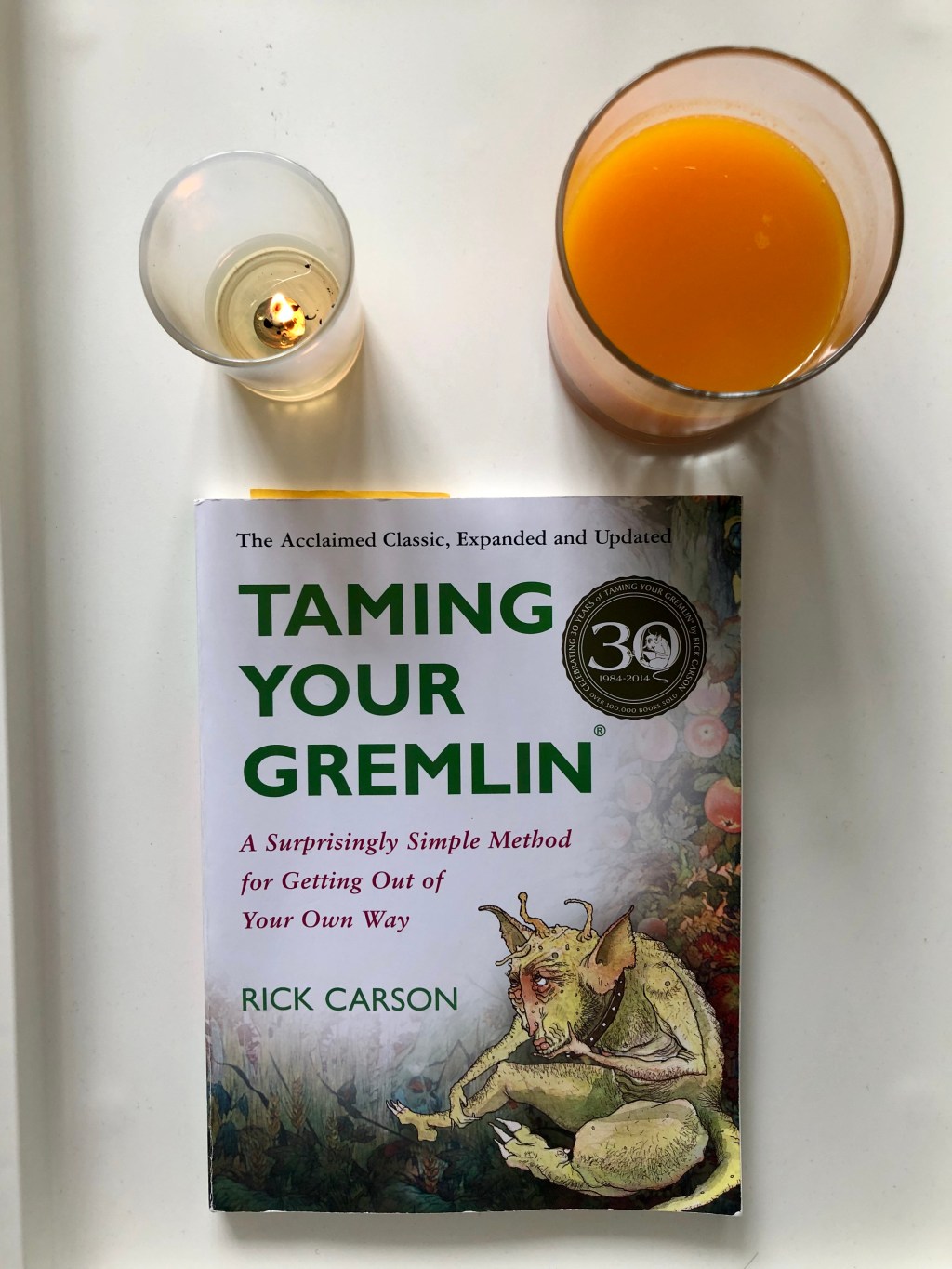
Inside us are countless voices, ready to interpret events for us and play to our fears. I’m reading Rick Carson’s Taming Your Gremlin and it has been a total eye-opener. Rick talks about how, quite often, we let our inner insecurities, fears, and preconceived notions get in the way of our happiness and joy. He has taken all negative elements and collectively called them our gremlin, sharing the idea that there’s a being inside us that would love nothing more than to keep us thinking too much, feeling too little, and is basically our harshest inner critic.
Gremlins come in all types and in his book Carson creates characters for the ones he’s seen commonly ruling people’s lives. He outlines 9 types, and I personally feel that 2 gremlins play the most significant role in my life:
• One termed “The Hulk”, visualized as being “between eight and nine feet tall, weighs between five hundred and six hundred pounds, and has an amorphous presence [that leaps out of the shadows at chosen moments] and, with his powerful right arm” grabs me by my collar and warns me to “sit down and shut up” [p. 15].
• The second one’s nicknamed “Coach Don Ledup” who is a crass and harried fellow always hurrying and pushing me, like a gym teacher during physical education class.
We all have gremlins that live within us, who want to see us miserable. When I watched The West Wing episode, I understood the pain and agony President Bartlett’s gremlin brought him. You see, it doesn’t matter who you are – whether you’re an employee at Safeway or the President of the United States – there will come a time when your gremlin will rule your life. And whether you’re a blogger or a politician, noticing the prevalence of this energy is the key first step to navigating it.
One of my surprising takeaways from Carson’s book was that we do not need to overcome our gremlins. All we need to do is keep a soft focus on them and notice them as opposed to concentrate on them. Carson’s distinction between allowing versus letting, and trying versus straining was powerful because it helped me understand the degrees to which our gremlins need to be engaged. Gremlins are a natural part of every human being and instead of trying to eradicate them from our psyche – which actually takes an outpouring of energy – we must understand ourselves and modify our behaviors in order to grow, and not be tired and drained.
So, when I saw this West Wing episode with new-found wisdom, I saw a human being – just like me – fighting a tough and sneaky gremlin. His humaneness was authentic, sincere, and endearing because he’s just like the rest of us – fighting the good fight. Though he eventually cools down and ultimately orders that the proportional response, Pericles One, order be carried out – seeing him struggle with, and tame his gremlin was meaningful and resonated with me immensely.

 Une Pause