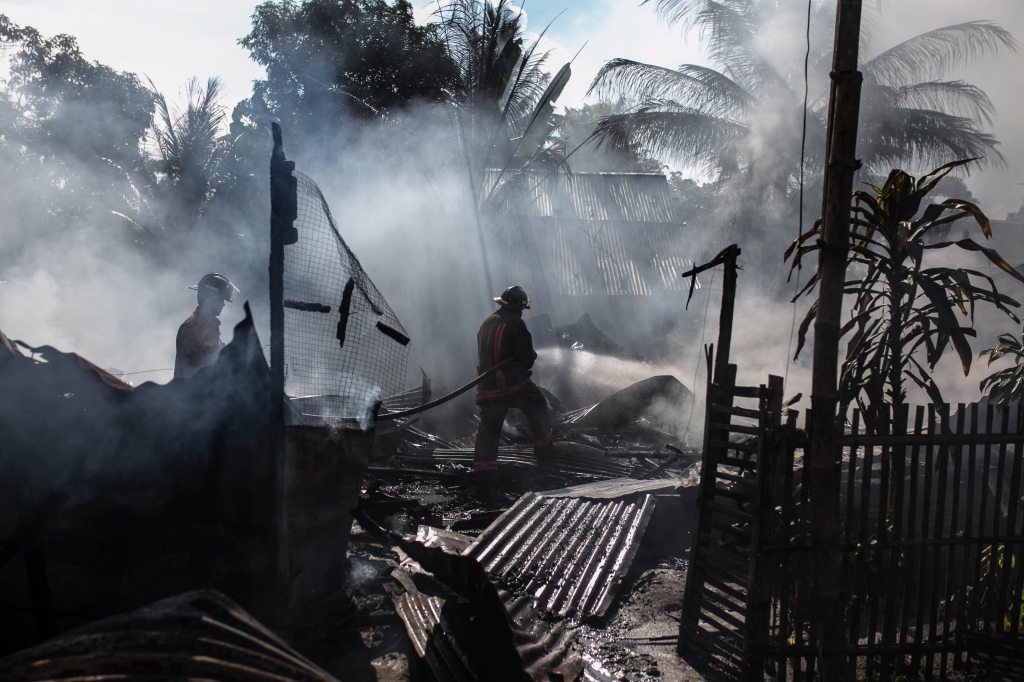
Hurricane Irma was a category four hurricane that affected 6.8 million residents of Florida. Occurring days after Hurricane Harvey – which hit Texas and may have killed up to 80 people – these natural disasters were a glaring reminder of just how much is out of humankind’s control.
Many in the West have a linear thought process about how our lives should be; if I work hard, I’ll save enough to buy a house. If I marry the love of my life, I’m going to be happy forever. If I go to college, I will get a well-paying job.
But as the past few weeks have shown us, things do not turn out as we wish. Despite taking a cerebral, logical, “brainy” approach to life, we forget that in the blink of an eye, all laid out plans can crumble (in a good or bad way).
Once Hurricane Irma hit, I read stories about topics that I wouldn’t have thought about as being important. For example when a tragedy hits, the questions asked foremost are what happened? How many people died? When will things get better?
I was surprised to read about what I’ll term unintended repercussions. Whether it was the death of 8 nursing home residents who perished from having lost air conditioning in their facility, the rescue of 70 foster children by a local Florida couple, or Mexico offering to help Hurricane Harvey victims, these unique stories brought to the forefront factions of affected populations that I wouldn’t have thought of before. These stories helped amplify the complexity of humankind – we are parents, daughters, foster children, seniors, and neighbors – each of whom has an experience worth sharing. And just as the story about the seniors was sad and surprising, stories regarding the foster children and Mexico’s offer was heartwarming and unexpected.
****
Going back to the unpredictability of life, when natural disasters or personal tragedies occur, the question from a left-brained society becomes, why did this happen? and how can we prevent it from happening again?
Sorry to break it to you, but according to Chinese philosopher Mencius: Nothing, really. The very nature of our questions assume that the world is a stable place, which Mencius would argue is a false premise. He’d argue that the world is a capricious and unpredictable place.
* * * *
Whether you are religious or not, much of our ideas and framework regarding hard work and reward come from the Protestant theology. The thought process is:
“We are stable selves who live in a stable world. We should act as rational-choice agents, calculating what will benefit us and what will cause us harm. If we look within, discover who we are, set out a plan for how we can flourish, and then work hard to fulfill that plan, we will prosper and grow as we should.” (The Path, pg. 59)
Sound familiar? It sure does to me. I come from a hardworking family of first generation immigrants who prospered. But what about those who worked hard and didn’t prosper?
This is what Mencius would ascribe as part of a capricious world. He believed that hard work did not necessarily promise success, pious behavior did not mean a prosperous life and heaven in the afterlife. There are no guarantees in a world so complex, fragmented and unstable. By defining ourselves, our circumstances and programming ourselves to expect specific behaviors or payoffs, we are liming ourselves and failing to live our best, most expansive lives.
When those of us who believe in a coherent world order are faced with a choice, we either think through it rationally (pro/con list, benefits v. risks) or use our gut/intuition. Mencius would argue there’s a third way, which is to train your mind and heart to become in sync with one another so that it better creates and adjusts to the future, thereby accepting a changing world. This is true even more so when you realize that not only is the world constantly changing, so are we. Our emotions, thoughts, sensibilities are constantly challenged and have the potential to change us substantially. Puett and Gross-Loh put it beautifully:
“When we rationally make big life decisions based on the idea that the world is coherent, we assume a clear-cut situation, clear-cut possibilities, a stable self, unchanging emotions, and an unchanging world (note to self: that’s a LOT of assumptions to make!!) But these things aren’t givens at all. By making concrete, defined plans, you are actually being abstract, because you are making these plans for a self that is abstract: a future self that you imagine based on who you think you are now, even though you, the world, and your circumstances will change. You cut yourself off from the real, messy complexities that are the basis from which you can develop as a human being. You eliminate your ability to grow as a person because you are limiting that growth to what is in the best interests of the person you happen to be now, and not the person you will become.’
‘If, instead, you maintain a constant consciousness of the world as unstable, you can start to think of all your decisions and responses as based on an awareness of the complex, ever-changing world and your complex, ever shifting self.” (The Path, pgs.77-78)
Nailed it. A length quote, but totally worth it. Though it may seem unnerving to let go of the Protestant framework that Mencius would argue ironically binds and limits us, the more freeing (read: daunting) alternative has the potential to set us free in more ways than one. If we accept that the world we live in is a complex place full of people that are anxious, happy, sad, doubtful (in other words, complex), we can hone our ability to understand the complexity of every situation before jumping to decisions or conclusions, thus challenging ourselves and growing holistically in the process.
Holistic growth in all directions of our complex being is the goal; the ability to respond to all of life’s unpredictable situations so that we can move on, instead of letting tragedy destroy us.
****
In applying this school of thought to Hurricane Irma, my biggest learning is to respond to the calamity at hand and channel my energy to go the most good, instead of stopping at why do bad things happen to good people?
For me this means donating to worthy nonprofits that are helping the victims of the hurricane, checking in on family and friends that live in affected region, and sending care packages to those in need.
By recognizing this world to be capricious, unpredictable and yes, unjust, we can develop our mind-heart connection and train our internal system to respond to events (good or bad) in an intuitive, multifaceted and comprehensive way without limiting ourselves and ultimately letting ourselves down with to quid pro quo ways of thinking.


 Une Pause